ROCD research has grown through collaboration with researchers and clinicians around the world. Our partners have replicated and extended the unit’s findings, tested ROCD models in clinical samples, and studied app-based interventions in their own countries. Below are some of the colleagues we have worked with, listed by country.
Australia
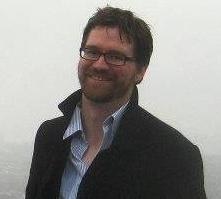
Assoc. Prof. Richard Moulding
Cairnmillar Institute, Melbourne
Clinical psychologist and associate professor who coordinates the clinical psychology master’s program at the Cairnmillar Institute and is Editor in Chief of the journal Clinical Psychologist. His work focuses on OCD, hoarding, emotion regulation and self-concept. Joint work includes the self-concept model of OCD (Doron, Kyrios & Moulding, 2007) and the clinical study of ROCD (Doron et al., 2016).
Canada
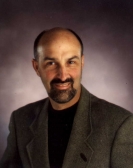
Prof. David A. Clark
University of New Brunswick
Professor Emeritus of Psychology at the University of New Brunswick and a practicing clinical psychologist. He trained with Aaron T. Beck and has written widely on the cognitive basis of depression, anxiety and obsessions, including Cognitive-Behavioral Therapy for OCD and Its Subtypes. Joint work includes an international study of unwanted intrusive thoughts across six continents (Radomsky et al., 2014).
Iran
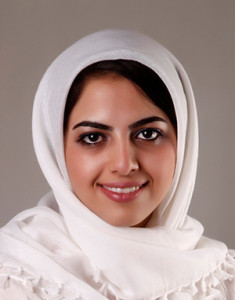
Azadeh (Azi) Attari
Ragheb Esfahani Institute of Higher Education
Clinical psychologist and researcher whose doctoral studies in psychology were at the Ferdowsi University of Mashhad. Her research addresses quality of life, interpersonal relationships and their dynamics in people with obsessive-compulsive disorder.
Israel
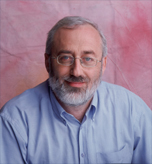
Prof. Mario Mikulincer
Hebrew University of Jerusalem
Professor of Psychology and Academic Director of the Israel Center for Addiction and Mental Health at the Hebrew University of Jerusalem, and a former dean of the School of Psychology at Reichman University. A leading researcher of adult attachment, he co-authored the unit’s studies linking attachment insecurities with obsessive-compulsive phenomena (Doron et al., 2009).
Italy

Dr. Gabriele Melli
IPSICO, Florence
Clinical psychologist and cognitive behavioral psychotherapist who directs the Centre of Excellence for Obsessive-Compulsive Disorder (CEDOC) at IPSICO in Florence. He led the independent clinical replication of ROCD beliefs (Melli et al., 2018) and a study of vulnerable narcissism and ROCD symptoms (Melli et al., 2023).
Dr. Claudia Carraresi
IPSICO, Florence
Clinical psychologist and cognitive behavioral psychotherapist at IPSICO in Florence, where she teaches behavioral techniques and exposure and response prevention for OCD. She co-authored the clinical study of maladaptive beliefs in ROCD (Melli et al., 2018).
Dr. Silvia Cerea
University of Padova
Researcher at the Department of General Psychology, University of Padova. Her team tested short daily cognitive training on a mobile app for ROCD symptoms (Cerea et al., 2020) and studied relationship quality, maximization and social media use in ROCD (Mancin et al., 2024).
Prof. Francesco Mancini
SPC and Guglielmo Marconi University, Rome
Psychotherapist and researcher at the School of Cognitive Psychotherapy (SPC) in Rome and Guglielmo Marconi University, known for his work on guilt and OCD. With colleagues from the Universities of Salerno and Bari, he co-authored a study showing that deontological guilt mediates the link between personality and ROCD symptoms (Tinella et al., 2024).
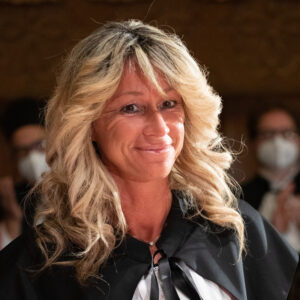
Prof. Marta Ghisi
University of Padova
Professor of clinical psychology in the Department of General Psychology at the University of Padova, where she also serves as a pro-rector for master’s programs and lifelong learning. She co-authored the trial of daily app-based training for ROCD symptoms (Cerea et al., 2020) and the study of relationship quality, maximization and social media use in ROCD (Mancin et al., 2024).
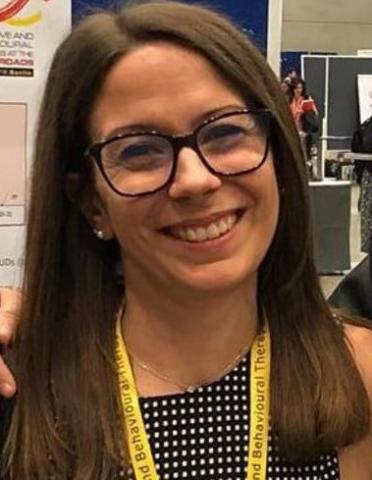
Prof. Gioia Bottesi
University of Padova
Associate professor of clinical psychology in the Department of General Psychology at the University of Padova. Her research covers intolerance of uncertainty, “not just right” experiences and the assessment and treatment of obsessive-compulsive spectrum problems, including ROCD. She co-authored the app-based training trial for ROCD symptoms (Cerea et al., 2020).
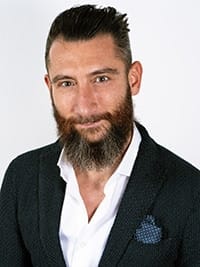
Dr. Francesco Bulli
IPSICO, Florence
Psychologist and psychotherapist at the Institute of Behavioral and Cognitive Psychology and Psychotherapy (IPSICO) in Florence. With Gabriele Melli he co-authored studies of maladaptive beliefs in a clinical ROCD sample (Melli et al., 2018) and of vulnerable narcissism and ROCD symptoms (Melli et al., 2023).
Dr. Luigi Tinella
University of Salerno and SPC, Rome
Researcher at the Department of Humanities, Philosophy and Education at the University of Salerno and at the School of Cognitive Psychotherapy (SPC) in Rome. He led the study showing that deontological guilt mediates the link between personality traits and relationship-centred ROCD symptoms (Tinella et al., 2024).
Dr. Teresa Cosentino
SPC, Rome
Clinician and researcher at the School of Cognitive Psychotherapy (SPC) in Rome. With Francesco Mancini she has written on guilt and the treatment of OCD, including a case of obsessive doubts about loving one’s partner. She co-authored the study of deontological guilt in ROCD (Tinella et al., 2024).
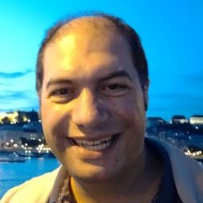
Prof. Alessandro O. Caffò
University of Bari
Associate professor in the Department of Educational Sciences, Psychology and Communication at the University of Bari, whose work spans spatial cognition, aging and psychometrics. He co-authored the study of deontological guilt in ROCD (Tinella et al., 2024).
Andrea Bosco
University of Bari
Researcher in the same department at the University of Bari, working in cognitive psychology and psychological assessment. Together with Elisabetta Ricciardi he co-authored the study of deontological guilt in ROCD (Tinella et al., 2024).
Other Italian co-authors of joint ROCD papers: Eleonora Carraro and Denise Broggio (Cerea et al., 2020), Laura Caccico and Elena Micheli (Melli et al., 2023), P. Mancin and Anna Malerba (Mancin et al., 2024), and Elisabetta Ricciardi (Tinella et al., 2024).
Spain
Prof. Amparo Belloch
University of Valencia
Full professor in the Department of Personality, Evaluation and Psychological Treatment at the University of Valencia, and part of its research and treatment unit for obsessive-compulsive and related disorders (I’TOC). Joint work includes app-based training for OCD-related beliefs that also measured ROCD symptoms (Roncero, Belloch & Doron, 2018; 2019) and cross-cultural studies of unwanted intrusive thoughts (Pascual-Vera et al., 2019).
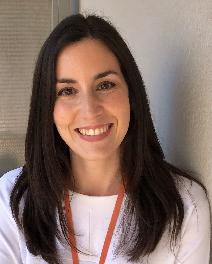
Dr. María Roncero
University of Valencia
Clinical psychologist and researcher at the University of Valencia’s I’TOC unit, where she led two studies of the GGRO app. In a crossover randomized trial, brief daily training reduced OCD-related beliefs and partner-focused ROCD symptoms in a non-clinical sample (Roncero, Belloch & Doron, 2019).
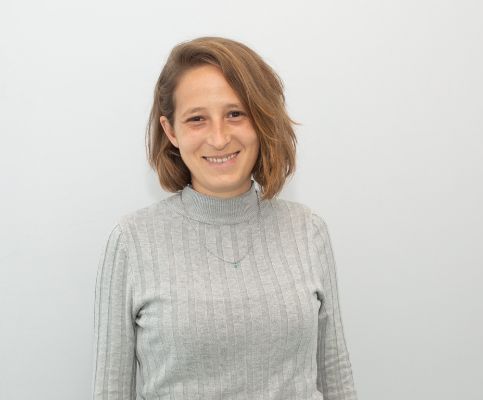
Dr. Belén Pascual-Vera
UNED, Madrid
Associate professor in the Department of Personality, Evaluation and Psychological Treatment at the National University of Distance Education (UNED). She leads an international study of unwanted intrusive thoughts across countries and disorders, in which the unit takes part (Pascual-Vera et al., 2019; 2021; 2025).
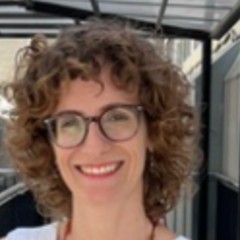
Prof. Gemma García-Soriano
University of Valencia
Full professor at the University of Valencia and a member of the I’TOC research group. Her team adapts app-based cognitive training for OCD-related beliefs to adolescents (Merchán et al., 2026).
Turkey
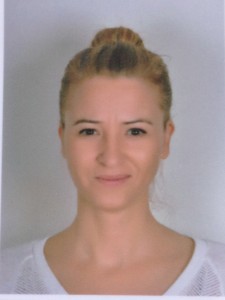
Prof. Mujgan Inozu
Hacettepe University, Ankara
Professor of clinical psychology at Hacettepe University. Her research covers OCD, unwanted intrusive thoughts, scrupulosity and cultural factors in obsessions. Joint work includes the international intrusive thoughts study (Radomsky et al., 2014) and a randomized trial of an app-based cognitive training program (Akın-Sarı et al., 2022).
Further collaborations
The ROCD questionnaires have also been translated and studied by research teams in many countries. See the ROCI and PROCSI translations.
The ROCD Research Unit · Our ROCD papers · Contact us about collaboration